
The giantess who makes Steenvoorde’s heart beat
Since 1853, La Belle Hélène has been one of the most iconic figures in Steenvoorde. Created for the Mi-Carême festivities, this historic giant has embodied the town’s attachment to Flemish folk traditions for more than 170 years. Admired, forgotten and eventually brought back to life, she has been part of the history of Steenvoorde’s Carnival and remains an ambassador for the living heritage of French Flanders.
Inspired by a legendary heroine and associated with the young flower seller who once enlivened the markets of Steenvoorde, La Belle Hélène has stood the test of time without ever losing her place in the hearts of local residents. Thanks to the dedication of the Amis de Gambrinus association, she continues to keep the tradition of Steenvoorde’s Giants alive and remains one of the iconic figures of the town’s Carnival.
A historic giant of Steenvoorde, La Belle Hélène was created in 1853 to mark the Mid-Lent festivities.
La Belle Hélène was created in 1853 for the Mi-Carême festivities, making her one of the oldest carnival giants in the Nord-Pas-de-Calais region. She takes her name from a chanson de geste, a medieval epic poem dating from the 14th century, which recounts her romantic adventures and her journey to find her two sons.
Other giants also featured in the festivities, including Jocrisse in 1862. La Belle Hélène of Steenvoorde continued to appear in the Mi-Carême celebrations at varying intervals until 1910.
1893: A colourful procession
The 1893 archives provide a particularly detailed account of Steenvoorde’s Carnival. The procession features drums and bugles, the Gambrinus float, a group of Armenians, the Marquis of Carabas float, the christening of the young marquis, and a float dedicated to pantomime.
The Steenvoorde Philharmonic Society, dressed in elaborate costumes, accompanies La Belle Hélène and her little Chinese figures. This account illustrates the giant’s place at the heart of a popular spectacle combining music, costumed characters and decorated floats.
The festivities continue over several days: Monday features a public dance and demonstrations of “Jean Tape Fort”, while Tuesday brings the procession of the “Figuemans”, the appearance of the “Pannekoek Huis” and the float of the gossipy women, known as “De Lange Tongen”. The celebrations conclude with La Belle Hélène’s ceremonial return at 8 p.m.
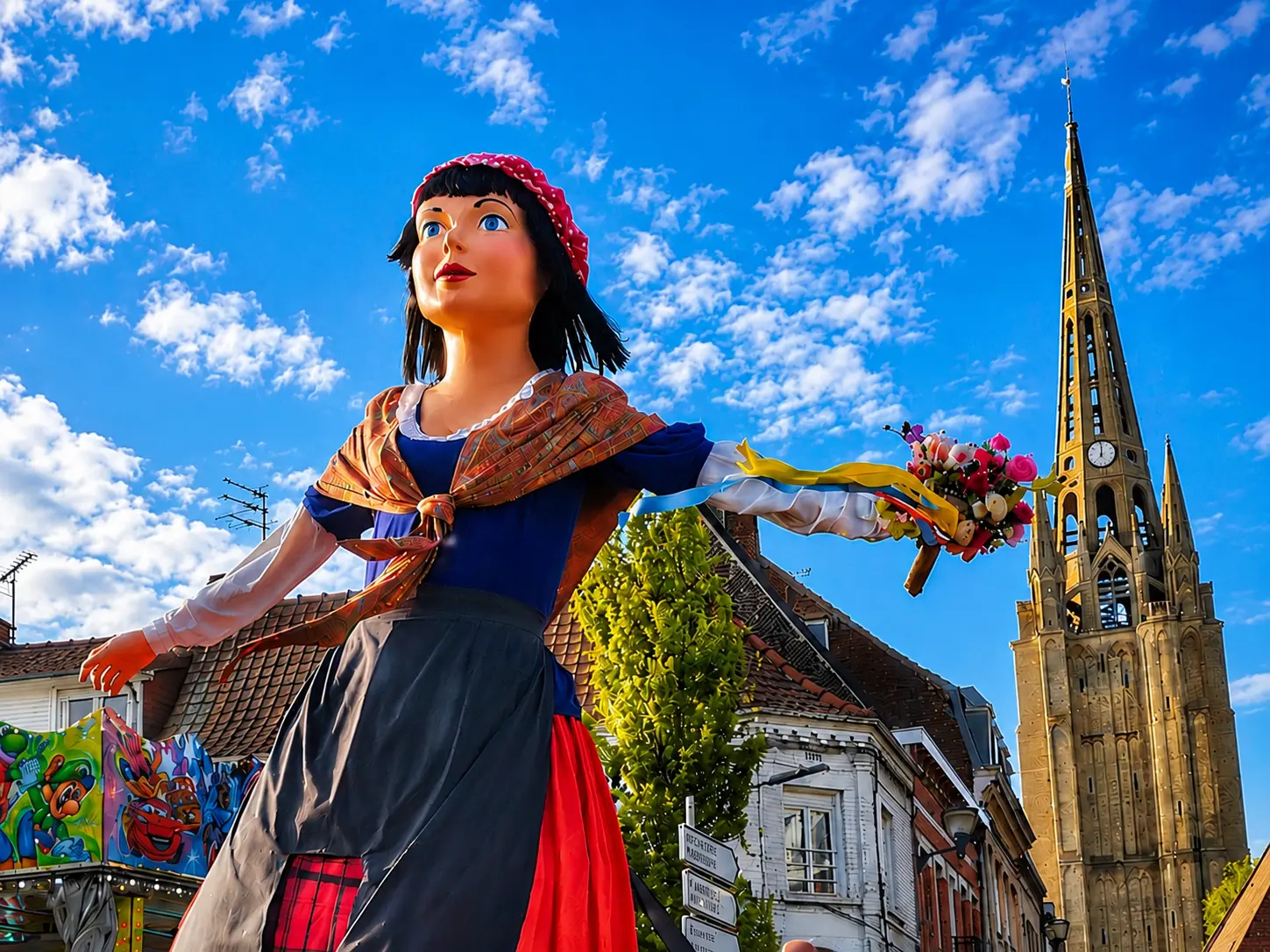
Belle Hélène is the historic giant created in 1853, then recreated by the Friends of Gambrinus in 1980
A Popular Figure with a Tumultuous Past
At the time, the giant was associated with the much-admired Hélène, a young and attractive flower seller at the local markets. She became known more for her generous figure and outspoken manner than for her flowers. In the estaminets, on feast days, masked groups would always find a few unfaithful husbands to tease about their “Belle”.
Resented and regarded as immoral, the giant of Steenvoorde gradually fell into obscurity and was left in a shed.
She was then mounted on a low cart used to transport hops to the railway station and given a straw hat.
Steenvoorde and its giants: a living heritage
Today, the Giantess of Steenvoorde remains a powerful symbol of Flemish folklore. She illustrates the richness of the traditions of the North, where giants play a central role in popular festivals.
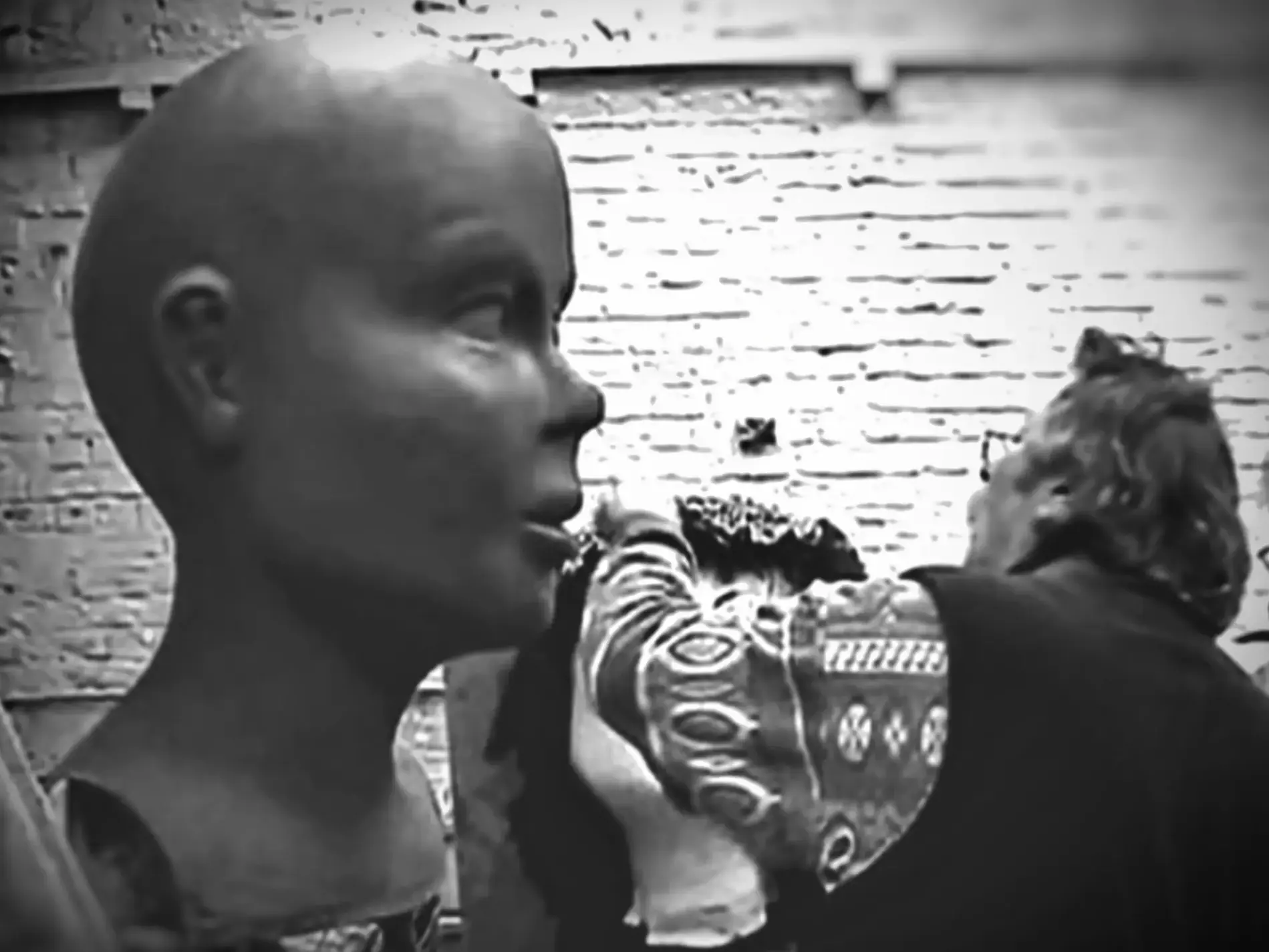
Committed to the tradition of the Giants of the North, the Roubaix-based craftsman Laurent Wadier, known as Machu, has created dozens of giants in his workshop. In 2005, he gave La Belle Hélène a new silhouette, whilst respecting her identity and the tradition of carried giants.
In April 1980, after a seventy-year absence, La Belle Hélène regained her place at the Steenvoorde Carnival, spearheaded by the Amis de Gambrinus. In 1993, to mark the 140th anniversary of her creation, she was restored and given a new look.
In 2005, La Belle Hélène was entirely recreated in wood and woven wicker, in the tradition of the portable giants of northern France.
Depending on the period and version, the giant measures between *3.60 m (2) and 4.30 m (*3), weighing between 45 kg (*2), *65 kg (3) and 75 kg (*1). Carried by a single person, she is distinguished by her movable arms, which rise as she dances.
The young Flemish girl wears brightly coloured everyday clothes: a blue apron, white sleeves, a red linen skirt and a bouquet of flowers in her hand.
Accompanied by the Steenvoorde Philharmonic Society, the Friends of Gambrinus – La Belle Hélène won first prize for dance at the Lille Festival of Carried Giants in 2003 and 2005.
France Bleu Nord - 2005 Festival of Carried Giants in Lille
In 2009, La Belle Hélène won first prize at the Buckingham Christmas Parade in England.
In 2012, she also won first prize for dance, in the category for giants carried by a single person, at the first Nieppe Festival of Carried Giants’ Dances.
In 2015, to mark the second Ducasse de Géants portés, the Steenvoorde Philharmonic Orchestra premiered the piece ‘Belle Hélène’, composed by its director Nicolas Decroix to celebrate the giant’s 35th anniversary. Intended to become her anthem, this piece now accompanies La Belle Hélène on her appearances.
Anthem of Belle Hélène
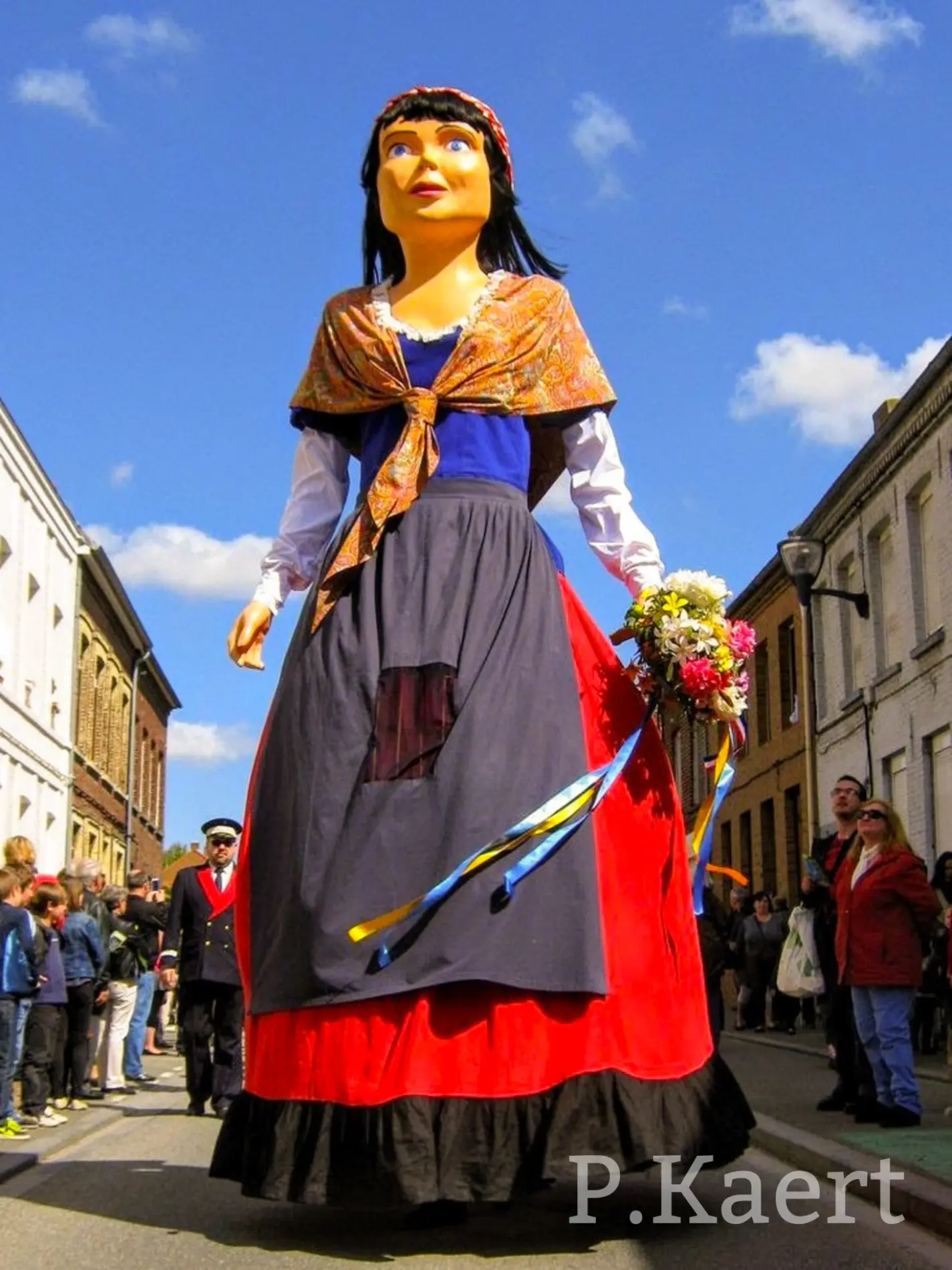
La Belle Hélène, patron of twenty giants
Over the years, La Belle Hélène has become the patron of twenty giants in France and Belgium. These patronages are a fine testament to the vitality of the Friends of Gambrinus and their devotion to their giant. They also illustrate the many encounters and friendships forged by the association with other towns and giant associations, from Rosalie the Milkmaid to André De Hout Kerquereuzes.
La Belle Hélène is the patron of twenty giants: Djoos the Bouleur, 1996 (Boëschepe), Sylvestre the Minstrel, 2001 (Saint-Sylvestre-Cappel), Rosalie the Milkmaid, 1994 (Hameau du Ryveld – Steenvoorde), Fidèle, 2010 (Oxelaëre), Jacobus, 2004 (Steenvoorde), Baron Scalfort, 2007 (Lallaing), Marie de la Motte, 2008 (Haubourdin), Gilbert de Bourghelles, 2010 (Bourghelles), Basséane (La Bassée), Augustin de Belempins, 2014 (Tourcoing), Armandine (Ham), Barabette, 2013 (Mazingarde), Ti Pierre, 2013 (Boulogne-sur-Mer), Nadège, 2015 (Tourcoing), Adolphe Sax, 2016 (Dinant – Belgium), Alicia Princesse des Anges, 2017 (Terdeghem), Le Jardinier, 2017 (Ath – Belgium), Francisco le reporter, 2019 (Calais), Marie-Louise Duquesne, 2022 (Bouvignies – Belgium), André De Hout Kerquereuzes, 2022 (Houtkerque).
Continue your tour
A key figure in Steenvoorde’s festivities, La Belle Hélène features in the major events of the Steenvoorde Carnival. Continue your exploration with the associations Les Amis de Gambrinus and Les Amis de Fromulus, which keep the traditions of the giants alive in Steenvoorde. Discover also the Giants of Steenvoorde and Jean the Woodcutter, then relive past editions of the Carnival thanks to the Steenvoorde Carnival Archives dating back to 2003.
SOURCE
*(1) Dictionary of the Giants of Northern France – Gérard Torpier, 2007.
*(2) Giants of the North / Pas-de-Calais – Robert Chaussois, 1998.
*(3) Gigantia, Un Mundo de Gigantes, 2021.
Editor’s note: The height of the giant varies depending on the size of the bearer, whilst her weight may vary depending on clothing and weather conditions. These variations, passed down through generations of bearers, in no way detract from the elegance of La Belle Hélène.

A website dedicated to the Giants of Steenvoorde, their history, their associations and the Summer Carnival.
© 2023 / 2026 – Steenvoorde and its Giants
Legal notices: Website hosted by planethoster.fr
Design: Pascal Cnockaert
Documentation and archives
The information presented on this website is based on public archives, historical publications, press articles, photographic collections, oral accounts and heritage resources relating to the history of Steenvoorde, its giants and its carnival.
Traduction automatique Deepl